The Complete Investment Properties Guide
Everything you need to know about building wealth through real estate investing in the Lehigh Valley — from your first rental property to a diversified portfolio. Written in plain English by Tim Tepes, PA Licensed Associate Broker with 36+ years of experience.

Tim Tepes
Assoc Broker — Tim Tepes Real Estate LLC | PA License #AB062628L
What's Inside This Guide
The IDEAL Framework
The IDEAL framework is Tim Tepes' signature approach to understanding how real estate builds wealth. Every rental property generates returns through five distinct channels — all working simultaneously. Once you understand IDEAL, you will never look at an investment property the same way again.
I = Income
I = Income
Rental income that tenants pay monthly, creating consistent cash flow. Your tenants effectively pay down your mortgage, cover your expenses, and generate profit — all while you build long-term wealth.
D = Depreciation
D = Depreciation
The IRS lets you deduct the "wear and tear" on your property over 27.5 years for residential rentals — even though your property is likely appreciating. This is a paper loss that reduces your taxable income, often dramatically.
E = Equity Buildup
E = Equity Buildup
Every month, your tenants pay down your mortgage principal, increasing your ownership stake. What starts as a loan gradually becomes yours — paid for by someone else.
A = Appreciation
A = Appreciation
Real estate values tend to increase over time. Market appreciation grows your property's value naturally, while forced appreciation — renovations and upgrades — can accelerate the process significantly.
L = Leverage
L = Leverage
The most powerful wealth-building tool in real estate. A small down payment controls a large asset. When the property grows in value, ALL of that growth belongs to you — not just your portion.
INCOME — How Tenants Build Your Wealth
When you own a rental property, your tenants pay you rent every month. This is your gross income — the starting point of your investment returns. But here is what makes real estate truly special: that rental income does more than just put money in your pocket.
Your tenants are effectively paying down your mortgage every month. They are covering your property taxes, insurance, and maintenance costs. And after all those expenses are paid, whatever is left over is your cash flow — pure passive income that arrives whether you are at your desk, on vacation, or sleeping.
In the Lehigh Valley, a typical single-family rental might generate $1,800–$2,200 per month in rent. After accounting for mortgage payments, taxes, insurance, and maintenance, a well-selected property can produce $200–$500+ per month in positive cash flow. Scale that across multiple properties, and you begin to see how real estate creates genuine financial independence.
Example: A $280,000 single-family home in Bethlehem rents for $2,000/month. After the mortgage ($1,397), property taxes ($350), insurance ($150), and maintenance reserve ($200), the net cash flow is approximately $97–$300/month — and your tenants have paid down $5,000+ in mortgage principal in year one.
DEPRECIATION — The Tax Benefit You Don't See
Here is something that surprises almost every new investor: the IRS lets you deduct the "wear and tear" on your rental property over 27.5 years for residential property — even though your property is likely increasing in value.
This is called depreciation, and it is one of the most powerful tax advantages in all of investing. For a $250,000 property (with land value excluded — typically about 20–25% of the purchase price), you might deduct $7,000–$9,000 per year from your taxable income. That is a paper loss — you are not actually losing money. The property is going up in value while the IRS lets you write off phantom "wear and tear."
This means you could be collecting $2,000 per month in rent and showing a loss on your tax return — legally. Few investments in the world offer this kind of tax advantage, and it is a major reason why real estate investors often pay far less in taxes than people with similar incomes from jobs or stock dividends.
EQUITY BUILDUP — Your Tenants Pay Off Your Mortgage
Every mortgage payment has two parts: principal (which reduces what you owe) and interest (which is the cost of borrowing). In the early years, most of your payment goes toward interest. But over time, more and more goes toward principal — and it is your tenants who are making those payments.
This is the magic of equity buildup. You start with a $210,000 loan on a $280,000 property. After five years of tenants paying your mortgage, you might owe $195,000. After ten years, maybe $175,000. After 20 years, perhaps $120,000. And after 30 years, the mortgage is completely paid off — and you own the property free and clear.
The best part? You did not pay a dime of that mortgage yourself. Your tenants paid every dollar while you collected cash flow and watched your net worth grow.
Real Example: On a $210,000 mortgage at 7% interest over 30 years, your tenants will pay down approximately $5,000 in principal in year one alone — building your equity by $5,000 while you also collect monthly cash flow.
APPRECIATION — Your Property Grows in Value
Historically, real estate values tend to increase over time. This is called appreciation, and it is a fundamental driver of wealth in real estate investing. While appreciation is never guaranteed, the long-term trend has been consistently positive — especially in growing markets like the Lehigh Valley.
There are two types of appreciation:
- Market Appreciation — The natural increase in property values driven by supply and demand, economic growth, population increases, and inflation. The Lehigh Valley has seen 40%+ appreciation over the past five years.
- Forced Appreciation — The increase in value you create through renovations, upgrades, and improvements. Adding a bathroom, updating the kitchen, or finishing a basement can increase your property's value far more than the cost of the work.
When you combine appreciation with income, depreciation, and equity buildup, you begin to see why real estate is such a powerful wealth-building vehicle.
LEVERAGE — The Most Powerful Tool in Real Estate
Leverage is what makes real estate fundamentally different from almost every other investment. It is the ability to control a large, expensive asset with a relatively small amount of your own money.
Think of it like farming. It's like planting seeds — you put a little in the ground and the harvest is yours. You plant a small seed (your down payment), the bank provides the rest of the water and sunlight (the mortgage), and when the crop grows (the property appreciates), the entire harvest belongs to you — not just your small portion.
Here is how powerful leverage really is:
With just $50,000 invested, you earned a 100% return. If you had paid all cash, your return would have been only 25%. That is the power of leverage — the bank loan allowed you to earn returns on the full value of the property, not just your portion.
Section 1
1031 Exchanges
A 1031 Exchange — named after Section 1031 of the Internal Revenue Code — is one of the most powerful wealth-building tools available to real estate investors. It allows you to sell an investment property and roll the proceeds into another investment property, deferring capital gains taxes that you would otherwise owe on the sale.
In simple terms: instead of selling a property, paying taxes on the profit, and then reinvesting what is left, a 1031 exchange lets you reinvest the full amount — including the money you would have paid in taxes. This means more money working for you, compounding your wealth faster.
Timeline Rules
45-Day Identification Period
You must identify potential replacement properties within 45 days of selling your relinquished property. This is a hard deadline — there are no extensions. You can identify up to three properties (the "Three Property Rule") or any number of properties as long as their total value does not exceed 200% of the sold property's value.
180-Day Closing Period
The replacement property must be purchased and the exchange completed within 180 days of the sale of your relinquished property — or by the due date of your tax return (including extensions), whichever comes first. Again, this deadline is firm.
Types of 1031 Exchanges
- Forward Exchange — The most common type. You sell your existing property first, then purchase the replacement property within the 180-day window. This is what most investors use.
- Reverse Exchange — You acquire the replacement property before selling your existing property. A Qualified Intermediary holds the new property in an "Exchange Accommodation Titleholder" (EAT) arrangement until you sell your original property. This is more complex but useful when you find the perfect replacement property first.
- Improvement (Build-to-Suit) Exchange — You can use exchange funds to improve the replacement property during the 180-day exchange period. This is powerful for forced appreciation — you exchange into a property and use remaining funds for renovations that increase its value.
Key Requirements
- Qualified Intermediary (QI): A neutral third party must hold the sale proceeds between transactions. You cannot have actual or constructive receipt of the funds at any point during the exchange.
- Like-Kind Property: The replacement property must be "like-kind" — real property held for investment or business use. Almost all investment real estate qualifies, including residential rentals, commercial properties, and vacant land.
- Equal or Greater Value: To defer 100% of capital gains, the replacement property must be of equal or greater value. Any "boot" — cash received or debt reduced — is taxable.
Important Disclaimer
1031 exchanges involve complex IRS rules. This information is for educational purposes only. Always consult with a qualified tax advisor, CPA, and qualified intermediary before executing an exchange. Tim Tepes works with experienced 1031 Exchange professionals and can connect you with the right team.
For more detail, see the IRS Guidelines on Like-Kind Exchanges.
Section 2
DSTs — Delaware Statutory Trusts
A Delaware Statutory Trust (DST) is a passive investment vehicle where investors own a fractional interest in institutional-quality real estate — think large apartment complexes, office buildings, industrial properties, and retail centers. These are the kinds of properties that individual investors could never buy on their own.
DSTs have become increasingly popular because they qualify as replacement property for 1031 exchanges. This means if you sell an investment property and want to defer your capital gains through a 1031 exchange, you can invest the proceeds into a DST instead of finding, purchasing, and managing a property yourself.
How DSTs Work
A sponsor creates the trust, acquires the property, and manages all day-to-day operations. Investors purchase fractional ownership interests (typically $100,000 minimum) and receive proportional rental income and tax benefits — including depreciation — without any management responsibilities.
Benefits of DSTs
Passive Ownership
No property management, no tenant calls, no maintenance decisions. The sponsor handles everything.
Professional Management
Experienced institutional operators manage the property, optimize rents, and handle all operations.
Diversification
Spread your investment across multiple large-scale properties and geographic markets — reducing risk.
1031 Exchange Eligible
DST interests qualify as "like-kind" replacement property for 1031 exchanges under IRS Revenue Ruling 2004-86.
Who Are DSTs Ideal For?
- Investors completing a 1031 exchange who want a passive option
- Retirees looking to transition from active property management to passive income
- Out-of-area investors who cannot manage local properties
- Investors wanting exposure to institutional-quality properties
- Heirs inheriting property who want to exchange into a managed investment
Note on Liquidity
DST investments are generally illiquid — there is typically no secondary market. Investors should plan to hold the investment for the duration of the holding period (often 5–10 years). Consult with Tim or your financial advisor to understand if DSTs fit your investment timeline.
Section 3
Understanding Income from Rental Property
Before you can evaluate any investment property, you need to understand the difference between gross income and net income. This distinction is the foundation of every financial analysis you will ever do as a real estate investor.
Gross Income
Gross income is the total rent you collect before any deductions. If your property rents for $2,000/month, your gross annual income is $24,000. Simple enough — but gross income is not the number you should base your decisions on. Why? Because you will not collect rent every single month.
Vacancy and Effective Gross Income
No rental property stays occupied 100% of the time. Tenants move out, repairs are needed between tenants, and there is always a gap. In the Lehigh Valley, a realistic vacancy rate is 5–8% of gross income.
To calculate your Effective Gross Income (EGI):
Gross Annual Income: $2,000 × 12 = $24,000
Minus Vacancy (5%): $24,000 × 0.05 = $1,200
Effective Gross Income: $24,000 – $1,200 = $22,800
Net Operating Income (NOI)
From your Effective Gross Income, you subtract all operating expenses (which we break down in the next section) to arrive at your Net Operating Income (NOI). NOI is one of the most important numbers in real estate investing — it tells you how much income the property generates after all expenses but before mortgage payments.
Effective Gross Income: $22,800
Minus Operating Expenses: $8,100
Net Operating Income (NOI): $14,700
NOI is used to calculate cap rate, and it is the number lenders look at to determine if a property can support a mortgage. We will cover how to use NOI in the Cap Rate and Evaluation Worksheet sections below.
Section 4
Operating Expenses
Operating expenses are the costs of owning and managing a rental property — everything except your mortgage payment. Accurately estimating these expenses is critical because underestimating them is the most common mistake new investors make. Here is what to budget for:
Property Taxes
In the Lehigh Valley, property taxes vary significantly by municipality and school district. Budget $3,000–$8,000+ per year for a typical single-family rental. Your county assessor's office or Tim can provide exact figures for any property.
Insurance
A landlord insurance policy (different from homeowner's insurance) typically costs $1,200–$2,400/year. This covers the building, liability, and loss of rent. Umbrella policies add additional protection.
Maintenance & Repairs
Budget 5–10% of gross rent annually for routine maintenance and unexpected repairs. Newer properties need less; older properties may need more. This covers HVAC service, plumbing, roof repairs, appliance replacement, and general upkeep.
Utilities (Owner-Paid)
If you pay any utilities (common in multifamily or student rentals), budget for water, sewer, trash, and common area electric. Many single-family landlords pass all utilities to tenants.
Property Management Fees
If you hire a property manager, expect to pay 8–12% of gross rent, plus potential leasing fees (50–100% of first month's rent) and maintenance coordination fees. See Section 5 for details.
HOA Fees
If the property is in a homeowners association, HOA fees can range from $50–$400+/month. These cover common area maintenance, amenities, and reserves. Always review the HOA's financial health before buying.
Reserves for Capital Expenditures
Always set aside money for big-ticket items that will eventually need replacement: roof ($8,000–$20,000), HVAC ($5,000–$12,000), water heater ($1,000–$2,500), windows, siding, and appliances. A good rule of thumb is to budget $100–$200/month in reserves for a typical single-family home. This is not an operating expense in the traditional sense, but experienced investors treat it as one.
Sample Operating Expense Budget — $280,000 Single-Family in Bethlehem
Section 5
Property Management Fees
A property management company handles the day-to-day operations of your rental property so you do not have to. They are the middleman between you and your tenants, and they can be invaluable for keeping your investment running smoothly — especially if you own multiple properties or live far from your rental.
What Does a Property Manager Do?
Typical Fee Structures
Self-Management vs. Professional Management
Self-Manage When:
- • You live near the property
- • You own only 1–2 properties
- • You have the time and desire to be hands-on
- • You want to maximize cash flow (save 8–12%)
- • You are experienced and comfortable with tenant interactions
Hire a Manager When:
- • You own multiple properties
- • You live far from the rental
- • You have a demanding job or travel frequently
- • You want to be a passive investor
- • You want professional tenant screening and legal compliance
Tim can connect you with reputable property management companies in the Lehigh Valley. The cost of management is a business expense — it reduces your taxable income.
Section 6
Leases — Your Legal Shield
A lease agreement is the single most important document in your rental business. It is the legal contract between you and your tenant that defines the rules, expectations, and protections for both parties. A strong lease protects your income, your property, and your legal rights as a landlord.
Typical Lease Terms
- Lease Duration: 12 months is standard. Month-to-month leases offer flexibility but less stability. Some investors use 18–24 month leases to reduce turnover.
- Rent Amount & Due Date: Clearly state the monthly rent, due date, and accepted payment methods.
- Late Fees: Typically 5–10% of monthly rent if paid after a grace period (usually 3–5 days).
- Security Deposit: The amount and conditions for return, per PA law (see Section 7).
- Maintenance Responsibilities: Clearly define what the tenant handles (light bulbs, filters, minor repairs) vs. what the landlord handles (major systems, structural issues).
- Pet Policy: Whether pets are allowed, pet deposits, monthly pet rent, breed/size restrictions.
- Termination & Renewal: Notice requirements, renewal terms, and early termination clauses.
Always Use a Written Lease
Verbal agreements are difficult to enforce and leave both parties vulnerable. Always use a written lease reviewed by a Pennsylvania attorney. Strong leases prevent disputes, ensure consistent income, and protect you legally. Tim can recommend experienced landlord-tenant attorneys in the Lehigh Valley.
Section 7
Pennsylvania Landlord Rules & Regulations
Every state has its own landlord-tenant laws, and Pennsylvania's are outlined primarily in the Landlord and Tenant Act (68 P.S. § 250.101 et seq.). Understanding these rules is essential — violations can result in fines, lawsuits, and loss of your security deposit. Here are the key provisions every PA landlord should know:
Security Deposit Limits
- First year of tenancy: Maximum of two months' rent
- After the first year: Maximum of one month's rent
- Must be held in a federally insured, interest-bearing account located in Pennsylvania
- Return deadline: Within 30 days of move-out, with an itemized list of any deductions
Required Disclosures
- Lead-based paint disclosure for properties built before 1978 (federal requirement)
- Security deposit receipt and location disclosure
- Name and address of the property owner and managing agent
Eviction Procedures
Pennsylvania requires formal eviction proceedings through the Magisterial District Court. Self-help evictions (changing locks, shutting off utilities, removing belongings) are illegal. The process typically involves:
- Providing written notice to the tenant (10 days for non-payment)
- Filing a complaint with the Magisterial District Court
- Court hearing and judgment
- If judgment is for the landlord, a 10-day appeal period
- Sheriff executes the eviction (after appeal period expires)
The entire process typically takes 30–60+ days.
Fair Housing Compliance
Pennsylvania's Human Relations Act and the federal Fair Housing Act prohibit discrimination based on race, color, religion, national origin, sex, disability, familial status, and age (60+). See Section 8 for full details.
PA Attorney General Landlord-Tenant Guide
The Pennsylvania Attorney General's office publishes a comprehensive landlord-tenant guide. Access Consumer Resources at PA Attorney General.
PA Landlord-Tenant Law Overview
For a full summary of Pennsylvania landlord-tenant law, visit the PA Legislature — Landlord and Tenant Act.
This is a general overview and not legal advice. Consult with a Pennsylvania landlord-tenant attorney for guidance specific to your situation.
Section 8
Fair Housing Compliance
Fair housing laws exist to ensure equal access to housing for everyone. As a landlord or investor, you must understand and comply with these laws — violations carry severe penalties including fines, lawsuits, and loss of your real estate license.
Protected Classes (Federal)
What You Can and Cannot Do
Never Ask or Consider:
- • Race, ethnicity, or national origin
- • Religion or religious practices
- • Gender, sexual orientation, or gender identity
- • Whether a tenant is pregnant or has children
- • Age (for tenants 60+ in PA)
- • Disability status or need for accommodations
- • Citizenship or immigration status
You CAN Legally Consider:
- • Credit history and credit score
- • Income and employment verification
- • Rental history and references
- • Criminal history (with limitations)
- • Ability to pay rent (typically 3× monthly rent)
- • Pet policy (applied consistently)
- • Smoking policy (applied consistently)
Reasonable Accommodations
Under fair housing law, landlords must provide reasonable accommodations for tenants with disabilities. This may include allowing service animals even in no-pet properties, making physical modifications to the unit at the tenant's expense, or adjusting policies (such as allowing a disabled tenant to have a caregiver). Denying reasonable accommodations is a violation of fair housing law.
Section 9
Investment Property Evaluation Worksheet
Every investment property should be evaluated the same way — with a step-by-step financial analysis. Use this worksheet as a checklist when analyzing any potential deal. Tim provides customized evaluation for every property, but this gives you the framework to understand the numbers yourself.
Property Evaluation Worksheet — Step by Step
Purchase Price
What you are paying for the property.
Expected Monthly Rent
What the market supports for comparable rentals in the area.
Gross Annual Income
Monthly rent × 12 months.
Vacancy Rate (5–8%)
Subtract a realistic vacancy allowance. Not every month will be occupied.
Effective Gross Income
Gross Annual Income minus vacancy loss.
Operating Expenses
Property taxes, insurance, maintenance, management fees, HOA, reserves.
Net Operating Income (NOI)
Effective Gross Income minus Operating Expenses.
Debt Service
Annual mortgage payment (principal + interest).
Cash Flow
NOI minus Debt Service. This is your annual profit or loss.
Cap Rate
NOI ÷ Purchase Price. Shows the unleveraged return.
Cash-on-Cash Return
Annual Cash Flow ÷ Total Cash Invested. Shows your actual return on money invested.
The 1% Rule
Monthly rent should ideally be ~1% of the purchase price as a quick screening test.
Worked Example — $280,000 Bethlehem Single-Family
Note: Cash flow ranges depend on actual vacancy, maintenance costs, and management approach. This example illustrates the importance of accurate expense estimation — even a small difference in assumptions can turn positive cash flow negative.
The 1% Rule
The 1% rule is a quick screening test: the monthly rent should be approximately 1% of the purchase price. A $200,000 property should rent for about $2,000/month. A $300,000 property should rent for about $3,000/month. If a property fails the 1% rule, it may still be a good investment (appreciation, tax benefits, etc.), but it is unlikely to generate strong cash flow. In the Lehigh Valley, the 1% rule is achievable in many areas — which is part of what makes the market attractive to investors.
Section 10
Cap Rate — Capitalization Rate
Cap rate (capitalization rate) is one of the most widely used metrics in real estate investing. It measures the property's rate of return without considering financing — which makes it the perfect tool for comparing different investment properties on a level playing field.
How to Calculate Cap Rate
Cap Rate = Net Operating Income (NOI) ÷ Purchase Price
Example: $14,700 NOI ÷ $280,000 Purchase Price = 5.25% Cap Rate
What's a Good Cap Rate in the Lehigh Valley?
For comparison: NYC cap rates are typically 2–3%, Northern NJ is 3–4%, and Philadelphia is 3–5%. The Lehigh Valley's 5–8% cap rates significantly outperform these nearby markets.
Key Insight: A higher cap rate does not always mean a better investment. A 4% cap rate in a rapidly appreciating area may outperform an 8% cap rate in a stagnant market over 10 years. Cap rate is best used to compare similar properties in the same market — Tim evaluates cap rate alongside appreciation potential, cash flow, and overall return for every property.
Section 11
Cash-on-Cash Return
While cap rate tells you the property's return without financing, cash-on-cash return shows you the actual return on your invested cash — including the effect of your mortgage. This is the metric that matters most to investors using financing because it answers the question: "What am I actually earning on the money I put into this deal?"
How to Calculate Cash-on-Cash Return
Cash-on-Cash Return = Annual Cash Flow ÷ Total Cash Invested
Example:
Annual Cash Flow: $2,400
Total Cash Invested: $85,000 (down payment + closing costs)
Cash-on-Cash Return: 2.82%
Why It Matters
Cash-on-cash return is the truest measure of your immediate return because it accounts for:
- Your actual cash outlay (down payment + closing costs + reserves)
- The impact of your mortgage payment on cash flow
- All operating expenses
A property with a high cap rate might have a low cash-on-cash return if the mortgage payment is large relative to the income. Conversely, a property with a modest cap rate can have an excellent cash-on-cash return if the financing is favorable. This is why cap rate and cash-on-cash return should always be evaluated together.
In the Lehigh Valley, well-selected investment properties typically achieve cash-on-cash returns of 4–10%, depending on the down payment, interest rate, and management approach. Tim calculates both metrics for every investment opportunity he evaluates.
Section 12
Tax Rates & Tax Returns for Rental Properties
One of the biggest advantages of owning rental real estate is the tax treatment. Real estate investors often pay significantly less in taxes than people with similar incomes from wages or stock investments. Here is why:
How Rental Income Is Taxed
Rental income is reported on your federal tax return as ordinary income. However, you are allowed to deduct virtually all expenses associated with owning and operating the rental — including many expenses that are not out-of-pocket costs, like depreciation.
Depreciation Deductions
The IRS allows you to depreciate residential rental property over 27.5 years. For a $280,000 property with $56,000 allocated to land (non-depreciable), the building value of $224,000 divided by 27.5 years = $8,145 per year in depreciation deductions. This is a paper loss — you are not actually spending money — but the IRS lets you deduct it from your rental income.
Deductible Expenses
Schedule E — Where Rental Income Lives on Your Tax Return
Rental income and expenses are reported on Schedule E (Form 1040) — Supplemental Income and Loss. This is a separate schedule from your regular income, and rental losses can sometimes offset other income (subject to passive activity loss rules and income limitations). If your adjusted gross income is under $100,000, you can deduct up to $25,000 in rental losses against your other income. Above $150,000, passive losses can only offset passive income unless you qualify for the real estate professional exception.
Important
Tax information is for general educational purposes only. Tax laws are complex and change frequently. Always consult with a qualified CPA or tax advisor for advice specific to your investment situation.
Section 13
Internal Rate of Return (IRR)
IRR (Internal Rate of Return) is the most comprehensive measure of investment performance because it accounts for everything — not just annual cash flow. It considers your cash flow each year, the equity buildup from mortgage paydown, the appreciation of the property, and the profit when you eventually sell.
IRR in Simple Terms
Think of IRR as the "total return" on your investment over the entire time you own the property. If you buy a property, hold it for 10 years, collect cash flow every year, and then sell it for a profit — IRR tells you your average annual return, factoring in the time value of money.
What Goes into IRR
- Annual Cash Flow — The net income you receive each year after all expenses and mortgage payments.
- Equity Buildup — The principal paydown from your mortgage each year (increases your ownership stake).
- Appreciation — The increase in property value over time.
- Sale Proceeds — The net profit when you sell the property, minus transaction costs and any deferred taxes.
Why IRR Matters
Cap rate only looks at one year's income relative to purchase price. Cash-on-cash only looks at your annual cash return. IRR looks at the entire lifecycle of the investment. A property with modest cash flow but strong appreciation and equity buildup can have an outstanding IRR — and that is the true measure of how well your investment is performing.
In the Lehigh Valley, well-selected investment properties held for 7–10 years can achieve IRRs of 12–20%+, combining cash flow, equity buildup, and appreciation. Tim calculates projected IRR for every investment property he evaluates.
Pro Tip: IRR is a projection, not a guarantee. It depends on your assumptions about future rents, expenses, appreciation, and sale price. The more conservative your assumptions, the more reliable your IRR projection. Tim uses conservative market data to provide realistic IRR estimates.
Section 14
Harvesting Equity — How Investors Scale Their Portfolios
One of the most powerful — and least understood — strategies in real estate investing is harvesting equity. This is how investors go from owning one rental property to building a portfolio of multiple properties, and it works like this:
Plant the Seed
You buy a rental property with a down payment (say $50,000 on a $200,000 property). Tenants move in and start paying rent.
Grow the Crop
Over 3–5 years, your tenants pay down the mortgage (building equity), and the property appreciates in value. Your equity grows from $50,000 to $80,000–$120,000+.
Harvest the Equity
You do a cash-out refinance, pulling $60,000–$80,000 in equity out of the property. This money is tax-free because it is a loan, not income. Your original mortgage remains in place (or is replaced), and tenants continue paying rent.
Plant Again
You use the harvested equity as a down payment on a second (or third) property. Now you have two properties — both appreciating, both building equity, both generating cash flow.
Repeat
After another 3–5 years, harvest equity from both properties and buy more. This is how investors go from one property to five, ten, or twenty — growing their portfolio exponentially while each property pays for itself.
Think of it like farming: you planted seeds, grew the crop, and now you are harvesting the果实 (the fruit) to plant again. Each harvest gives you more seeds to plant, and the cycle accelerates over time. This is the fundamental strategy behind every successful real estate portfolio — and it works because of leverage, appreciation, and the tax-free nature of cash-out refinances.
Important Considerations
Cash-out refinances increase your mortgage balance and monthly payment. Make sure the property still cash flows positively after refinancing. Also, interest rates and market conditions affect the viability of this strategy. Tim provides detailed analysis for each equity harvest to ensure the numbers work.
Section 15
Retirement Planning with Investment Properties
Most people dream of a comfortable retirement but rely entirely on a 401(k) or IRA — accounts subject to stock market volatility, withdrawal penalties, and the risk of outliving your savings. Real estate offers a fundamentally different retirement strategy: paid-off rental properties generating reliable monthly income.
The Long-Term Vision: How It Works
Imagine starting at age 35 and buying one investment property every 2–3 years. Each property is rented out, with tenants paying the mortgage, expenses, and generating cash flow. Here is what your portfolio might look like over time:
| Timeline | Action | Est. Monthly Income |
|---|---|---|
| Year 1 | Purchase first rental property | $0 (property just acquired) |
| Year 3 | Purchase second rental property | $1,800 (Property #1) |
| Year 5 | Purchase third rental property | $3,600 (Properties #1 & #2) |
| Year 8 | Property #1 is 75% paid off | $5,400 (3 properties) |
| Year 10 | Portfolio of 4+ properties | $6,500–$8,000 |
| Year 15 | Properties significantly paid down | $10,000–$15,000+ |
| Retirement | Multiple paid-off properties | $12,000–$20,000+/month passive |
Real Estate vs. Traditional Retirement Accounts
401(k) / IRA
- • Subject to market volatility
- • No control over investments
- • Required minimum distributions (RMDs)
- • Taxed as ordinary income on withdrawal
- • Limited to annual contribution caps
- • Cannot be leveraged (you only grow your own money)
- • Risk of outliving your savings
Rental Property Portfolio
- • Physical asset with tangible value
- • You make all management decisions
- • No contribution limits — buy as many as you can
- • Tax advantages (depreciation, deductions, 1031)
- • Leveraged returns (your down payment controls full value)
- • Rents increase with inflation
- • Can be passed to heirs tax-efficiently
- • Monthly income you can count on
This is not about choosing one or the other — most successful investors do both. But if you are relying solely on a 401(k), real estate gives you an additional, highly reliable income stream that is not subject to market crashes. And unlike a 401(k), you can use leverage to grow your wealth exponentially — something no retirement account allows.
Section 16
Benefits of Owning Investment Property
Investment real estate offers more ways to generate wealth than almost any other asset class. Here is a complete summary of every major benefit — many of which work simultaneously on the same property:
Passive Income / Cash Flow
Monthly rental income that exceeds your expenses creates true passive income — money that arrives whether you are working or sleeping.
Tax Advantages
Depreciation deductions, operating expense write-offs, 1031 exchanges, and other provisions can significantly reduce your annual tax burden.
Equity Buildup
Tenants pay down your mortgage every month, steadily increasing your ownership stake and net worth — using someone else's money.
Appreciation
Property values generally increase over time. Lehigh Valley properties have appreciated over 40% in the last five years alone.
Leverage
Control a $250,000 asset with a $50,000 investment. All appreciation and equity buildup apply to the full value — not just your down payment.
Inflation Hedge
As inflation rises, so do rents and property values. Real estate investors are protected — and often benefit — from inflationary pressure.
Portfolio Diversification
Real estate moves independently of stocks and bonds. Adding rental properties diversifies your portfolio and reduces overall risk.
Retirement Income
Paid-off properties generate reliable monthly income for decades — often outlasting any stock market retirement fund.
Wealth Transfer to Heirs
Real estate can be passed to the next generation through trusts and estate planning, creating a lasting legacy for your family.
Control
Unlike stocks or mutual funds, you make every decision: rent price, tenant selection, improvements, when to sell, and how to manage the asset.
Tax-Free Equity Harvesting
Refinance or cash-out refinance to pull equity out of your property tax-free and reinvest it into additional properties.
Frequently Asked Questions
How much money do I need to start investing in real estate?
Investment properties typically require 20–25% down payment. For a $250,000 property, that means $50,000–$62,500 in cash. Some financing options like DSCR loans may have different requirements. Tim can connect you with lenders who specialize in investment property financing.
Is the Lehigh Valley good for real estate investing?
Absolutely. The Lehigh Valley offers cap rates of 5–8%, strong rental demand from five major universities, a growing job market, and home values up over 40% in five years. These numbers significantly outperform NYC (2–3% cap rates), Northern NJ (3–4%), and Philadelphia (3–5%).
Should I self-manage or hire a property manager?
For a single property you live near, self-management can save 8–12% in fees. For multiple properties, out-of-area properties, or investors who value their time, professional management at 8–12% of gross rent is typically worth the cost. Tim can recommend reputable local property managers.
What is the difference between cap rate and cash-on-cash return?
Cap rate shows the property's return without considering financing — it is NOI divided by purchase price. Cash-on-cash return factors in your mortgage and shows the actual return on your invested cash. Both are important: cap rate helps compare properties, while cash-on-cash shows your real-world return.
Do I really get to deduct depreciation if my property is going up in value?
Yes. The IRS allows residential rental properties to be depreciated over 27.5 years, even if the property appreciates. This is one of the most powerful tax advantages in real estate. For a $250,000 property (with land value excluded), you might deduct $7,000–$9,000 annually — reducing your taxable income even though the property is gaining value.
What is a 1031 exchange and how does it work?
A 1031 exchange lets you sell an investment property and reinvest the proceeds into a like-kind property, deferring capital gains taxes. You have 45 days to identify replacement properties and 180 days to close. Tim coordinates with qualified intermediaries to ensure all deadlines and requirements are met.
What is the IDEAL framework?
The IDEAL framework is Tim Tepes' signature approach to understanding real estate wealth building. It stands for Income, Depreciation, Equity Buildup, Appreciation, and Leverage — the five pillars that make real estate one of the most powerful wealth-building tools available. Each letter represents a distinct way your investment generates returns simultaneously.
Your Investment Partner in the Lehigh Valley
This guide covers the fundamentals — but every investment is unique. The right property, the right financing, and the right strategy depend on your goals, budget, timeline, and risk tolerance.
With 36+ years of experience, 700+ closed transactions, and deep specialization in investment properties and small multifamily assets, Tim Tepes provides the analytical rigor and market knowledge that investors need.
Tim evaluates every property on its numbers — cap rate, cash-on-cash return, IRR, rent-to-value ratio, and long-term appreciation potential. He coordinates with local lenders, property managers, attorneys, contractors, and 1031 Exchange intermediaries to support investors from acquisition through management.
Whether you are buying your first rental or scaling a portfolio, Tim provides the expertise and relationships to make your investments succeed.
Go Deeper on Investment Strategies
Expand your knowledge with in-depth articles on advanced real estate investment strategies, tax-deferred exchanges, and wealth-building approaches.
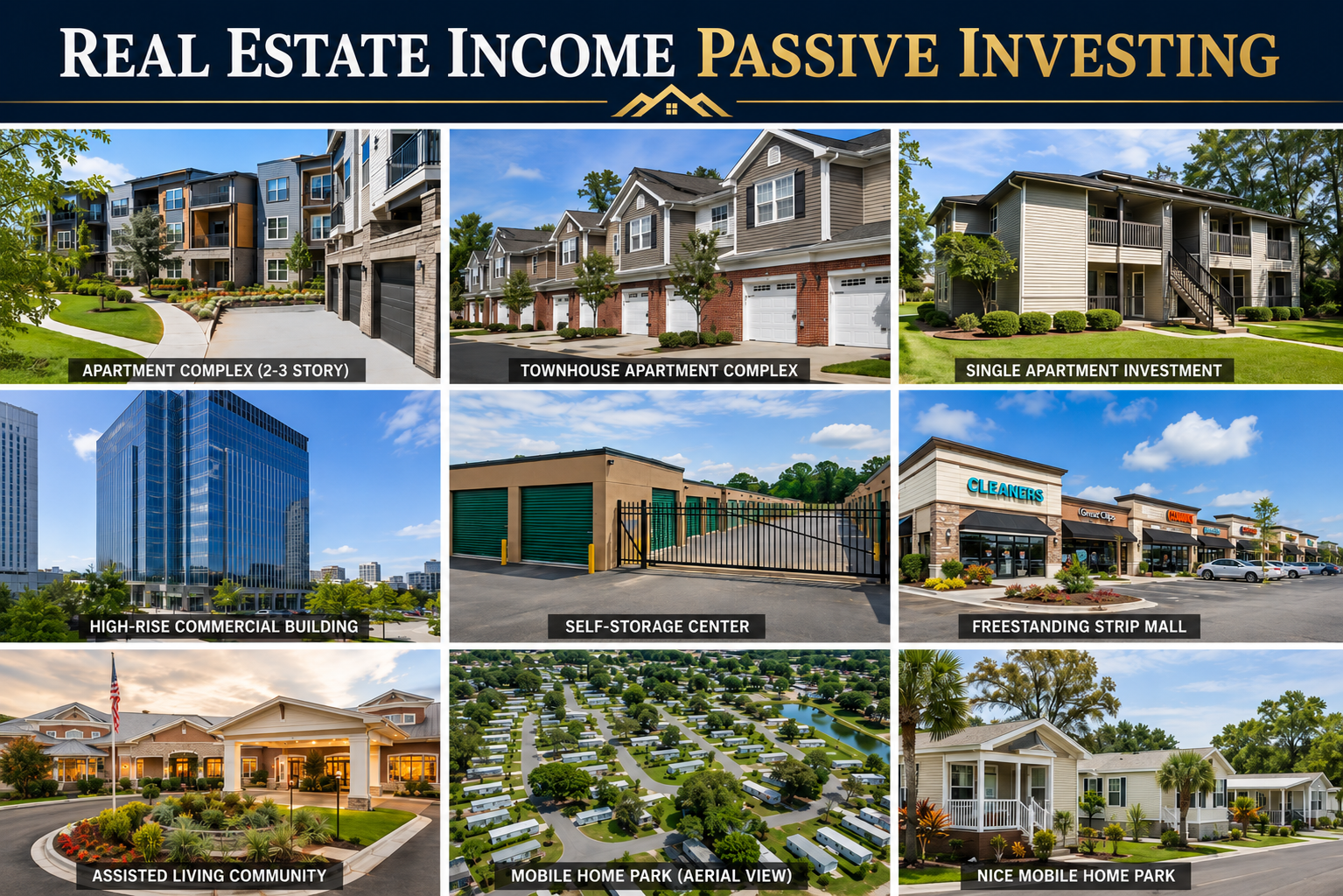 Podcast Feature
 How to Use 1031s & DSTs to Create Generational Wealth
Tim Tepes breaks down how 1031 exchanges and Delaware Statutory Trusts help investors build lasting generational wealth through real estate — featured on the Next Level Income Podcast.
Read the Full Article1031 Exchange Deep Dive
Review the complete 1031 exchange section above — including timeline rules, types of exchanges, key requirements, and practical examples for Lehigh Valley investors.
Jump to 1031 Section
Ready to Start Building Wealth Through Real Estate?
Whether you are buying your first rental, exploring a 1031 Exchange, considering a DST, or scaling a portfolio, Tim Tepes provides the market data, financial analysis, and local expertise to help you invest with confidence. Schedule a free consultation today.
Tim Tepes | Assoc Broker — Tim Tepes Real Estate LLC | PA License #AB062628L